

Online payments

Take payments online with the right setup for how you trade.

Online payments cover every way a UK business takes a card without the customer in front of you - ecommerce checkouts, in-app purchases, recurring subscriptions, phone orders, and payment links. The right setup depends on where your customers buy, what you sell, and how much technical resource you have.

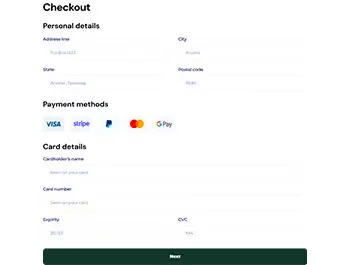
Illustration of online payment options across web and mobile

Powered by a growing network of trusted providers

  • Worldpay
  • Barclaycard
  • Cashflows
  • Fiserv
  • SumUp
  • Trust Payments
  • Adyen
Online payment routes

Three core routes to taking online payments

Most UK businesses fall into one of three online payment routes - or a combination. Start with the one that matches how your customers actually buy.

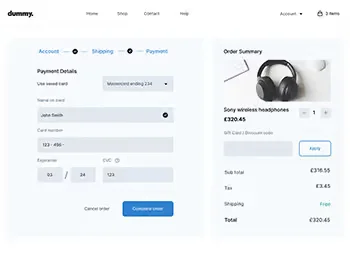
Illustration of online checkout options for website payments

Website Payments

Card processing through your website's checkout - hosted pages, embedded checkouts, or platform plugins for Shopify, WooCommerce, and similar stores.

  • Suits ecommerce, direct-to-consumer brands, and subscription stores.
  • Hosted, embedded, and platform-plugin routes to fit your build.
  • Rates from 0.5% when well matched to the right acquirer.
Explore website payments
Illustration of an in-app mobile payment SDK

Mobile App Payments

In-app purchases on iOS and Android through native SDKs, hosted screens, or hybrid integrations - built for mobile checkout speed.

  • Native SDKs for iOS and Android with branded in-app checkout.
  • Support for stored credentials, Apple Pay, and Google Pay.
  • Suits subscription apps, marketplaces, and mobile-first brands.
Explore mobile app payments
Illustration of a Click to Pay checkout experience

Click to Pay

EMV Secure Remote Commerce checkout that recognises returning customers across sites and removes the need to retype card details at every purchase.

  • Cuts checkout friction by removing 16-digit card entry.
  • Works across browsers and devices for repeat customers.
  • Layers onto existing gateways - not a full replacement.
Explore Click to Pay
Complementary tools

Tools that complement your online setup

Pay by Link and Virtual Terminals work alongside an online gateway - useful when you also take orders by phone, send invoices, or need to capture a payment without a checkout in front of the customer.

How to choose

Which online payment setup fits your business?

Each online route fits a different way of selling. Match yours to the one that minimises friction, cost, and compliance overhead.

You sell through a website

If your customers buy at a checkout, start with a website payment gateway. Choose hosted, embedded, or platform-plugin based on your build and team.

You sell inside a mobile app

If you take payments inside an iOS or Android app, an in-app SDK or hybrid integration is the right route. Native SDKs give the smoothest checkout but need development time.

You take orders by phone or email

If a customer can't reach a checkout, send a Pay by Link or process the card through a Virtual Terminal. Both handle MOTO without needing a hosted page.

You have repeat customers across devices

If a meaningful share of your customers buy more than once, Click to Pay can lift conversion by removing card entry on return visits. Layer it onto your existing gateway.

How online payment pricing actually works

Headline transaction rates rarely tell the full story. Online payment cost is shaped by who you are, what you sell, and which route you take to checkout.

What shapes your real cost

  • Transaction fees that vary by route, card type, volume, and whether you're on blended or interchange-plus pricing.
  • Monthly gateway fees, minimum service charges, and integration costs for SDKs or platform plugins.
  • Chargeback fees, refund handling, settlement timing, and cross-border or currency conversion costs.
  • Rolling reserves and stricter terms for higher-risk sectors, new businesses, or elevated dispute rates.
  • Fraud tooling, 3DS2, recurring billing, and Apple Pay or Google Pay support - all of which shift the total package cost.

We compare the total cost of each route side by side - not just the headline transaction rate.

Why Merchant Advice

Why use Merchant Advice instead of going straight to a provider?

Going direct means you only see one route. We put the market side-by-side so you can judge fit, cost, and terms before a single sales process narrows it for you.

Independent comparison

We're not tied to any one provider. We recommend the setup that fits your business - not the one that pays us best.

Negotiation support

We help you push back on the first offer - on rates, contract length, exit fees, reserves, and settlement terms.

Switching support

Already under contract? We help you check exit fees, timing, and parallel running so switching doesn't interrupt payments.

Complex case guidance

Been declined, had an account closed, or trade in a tougher sector? We work with specialist acquirers who underwrite properly.

A small business owner on the phone at her shop counter, beside a card terminal and till
Next step

Get clear on the right online payment route

Tell us how your business takes payments online and we'll help you decide which setup fits, what to compare next, and which providers are worth taking seriously.

  • Guidance based on your business model, not a sales pitch.
  • Support across gateways, acquirers, and platform plugins.
  • A clearer shortlist based on cost, fit, and approval likelihood.
Start My Free Comparison

Frequently asked questions

Do I need a payment gateway and a merchant account?
Yes - in most setups. The gateway transmits card data securely from your checkout; the merchant account holds the funds before they settle to your bank. Some providers bundle both into a single contract, others keep them separate. We help you compare both routes.
What's the difference between online payments and a card terminal?
Card terminals process face-to-face, card-present payments - chip-and-PIN, contactless, and mobile wallets at point of sale. Online payments cover everything else: ecommerce checkouts, in-app purchases, phone orders, and payment links.
Are online payments PCI DSS compliant?
All UK card processing must meet PCI DSS standards. The compliance burden depends on your setup - hosted payment pages keep the scope simplest, while embedded checkouts and direct APIs require more attention. We help you pick a route that matches your team's capacity.
How long does it take to set up online payments?
Hosted gateways and platform plugins can be live within a few days. Embedded checkouts, in-app SDKs, and higher-risk applications take longer - typically two to six weeks depending on underwriting and integration work.
Can I take international payments?
Yes. Most online payment providers we work with support 100+ currencies and local acquiring in major markets. Settlement currency, FX conversion, and local card scheme support all vary, so we help you compare the routes that matter for your customer base.
What if my business is in a higher-risk sector?
Higher-risk businesses - CBD, adult, supplements, gaming, travel, vape - need specialist acquirers who can underwrite the account properly. Mainstream providers usually decline by default. We work with the specialist banks that approve these sectors and keep accounts open.
Is there a cost for your service?
No. Our service is free for you. We're paid a small commission by the provider you choose, which doesn't increase your rates. It's how providers compensate us for matching them with merchants we recommend them to.