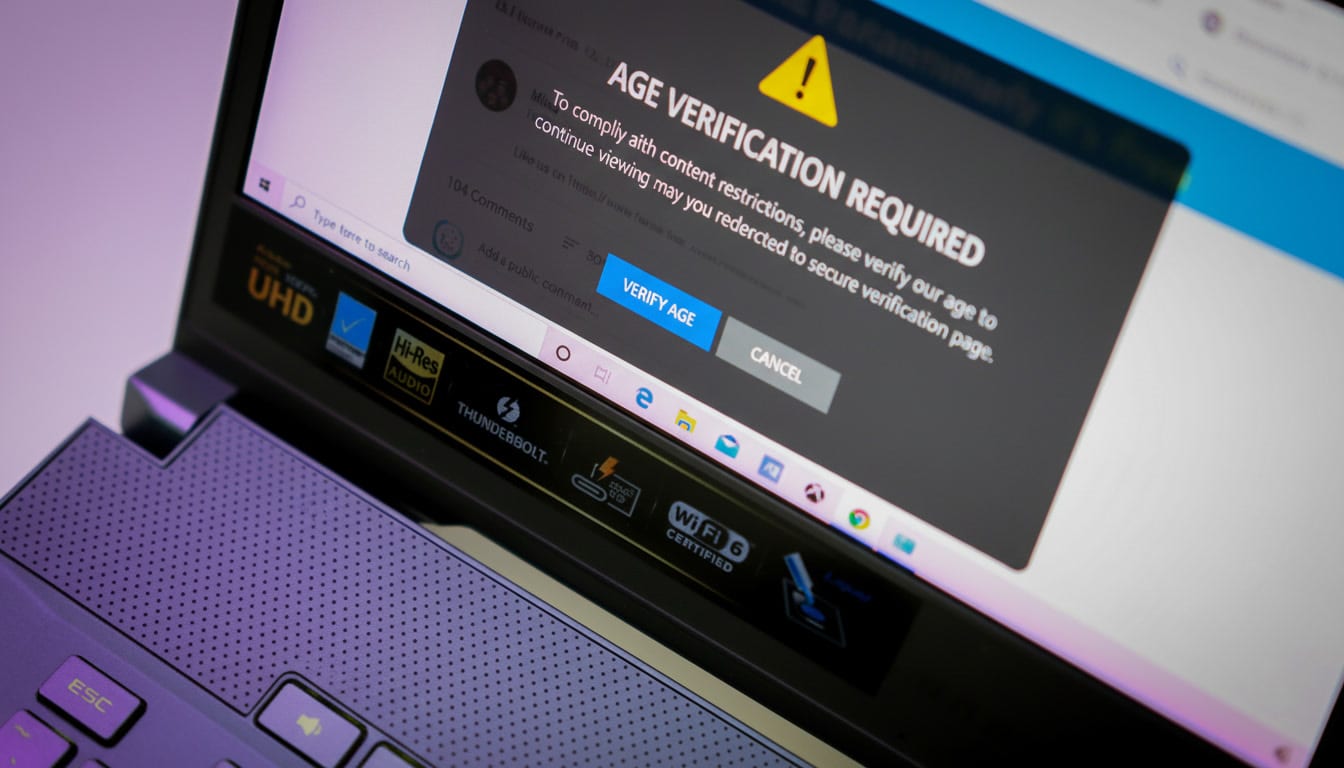





If you run an adult content platform, mainstream payment processors will not have you. Stripe, PayPal and Shopify Payments prohibit adult content (including porn, cams and explicit subscription content) in their Acceptable Use Policies. Anyone who tells you otherwise is selling you a short-term workaround.
This page is written for UK and EU operators of cam sites, fan platforms, adult streaming services, subscription content sites, pay-per-view services and adult dating platforms. It covers how an adult content payment gateway actually works, how payment processors for adult content underwrite the vertical, what fees and reserves look like in practice, what compliance the UK Online Safety Act and card schemes demand, and how to evaluate partner categories without falling for ranked best-of listicles.
Merchant Advice is an independent broker for high-risk merchants across the UK and EU. If you want to validate which partner category fits your platform before you approach anyone, speak to a specialist.
Specialist Payment Solutions for Adult Content
Adult content creators/platforms have three realistic payment routes, not a single out of the box solution. The right one depends on your model, your jurisdiction and how much acquiring control you want to keep in-house.
| Partner category | Where it fits | What to watch out for | |
|---|---|---|---|
| Adult-specialist all-in-one platform | Subscription, pay-per-view, cam and fan platforms that want billing, dispute tooling and acquiring under one roof. Useful when in-house payments resource is thin. | Less control over which acquirer holds the account, harder to migrate later, and pricing baked into the bundle rather than itemised. | Get matched |
| High-risk gateway plus specialist acquirer | Operators with technical resource who want acquirer transparency, choice of gateway integration and the ability to add a second acquirer for redundancy. | More admin overhead, more vendor relationships, and dispute tooling needs to be wired up rather than turned on. | Get matched |
| Crypto-rail processor as parallel option | Operators who want a secondary rail for jurisdictions where card acquiring is restricted, or who want cryptocurrency as a customer-funded payment option alongside cards. | Not a replacement for card acquiring. Most UK and EU adult content revenue still moves through Visa and Mastercard, so this category supplements rather than substitutes. | Get matched |
- All-in-one platforms. Faster to launch, easier to operate, but you are renting both the acquirer relationship and the dispute infrastructure.
- Gateway plus acquirer. The setup most established operators land on once they want to control acquirer choice, fees and continuity planning.
- Crypto rails. Useful as a supplementary rail. Treating it as the primary rail is a planning mistake for any operator serving mainstream UK and EU card customers.
Not sure which category fits your platform? Tell us about your model and we will line up the right shortlist.
What a Specialist Payment Gateway for Adult Content Actually Is
Technically, a specialist adult content gateway is identical to any payment gateway. The difference sits behind it, in the acquiring relationships, the merchant category code (MCC) and the underwriting risk appetite of the acquirer.
Most operators new to the vertical confuse three different things: the gateway, the merchant account and the acquirer. Pulling them apart makes the rest of this page easier to read.
| Component | What it does | Why it matters for adult content |
|---|---|---|
| Payment gateway | Captures the card data, runs 3D Secure, tokenises the card for recurring use and passes the transaction to the acquirer. | The gateway needs subscription, tokenisation and dispute tooling tuned for adult content billing patterns. |
| Merchant account | The account into which settled funds land before they reach your business bank account. | Boarded against the correct adult MCC by an acquirer that has signed off on the model and content policy. |
| Acquiring bank | Underwrites the merchant, takes the chargeback risk, settles funds and reports into the card schemes. | The single most important component. The acquirer's appetite for adult content is what makes the setup stable or unstable over time. |
| Card scheme rules | Visa and Mastercard programmes that govern adult content content review, ID linkage, dispute response and reporting. | Sit on top of everything else. Non-compliance with these programmes overrides any commercial agreement with the acquirer. |
In practice, when operators ask whether a gateway is "adult-friendly", they are really asking whether the acquiring bank behind it will keep their account open at scale.
Specialist vs Mainstream Processing for Adult Content
| Dimension | Mainstream rails (Stripe, PayPal) | Specialist adult content acquirer |
|---|---|---|
| Policy stance | Adult content prohibited in the Acceptable Use Policy. | Adult content underwritten against the correct MCC. |
| Time horizon | Early acceptance is temporary. Closure follows once payment patterns or content are reviewed. | Designed for the long term, with the chargeback profile already priced into the agreement. |
| Dispute infrastructure | Generic chargeback flows. No specialist tooling for the friendly fraud patterns this category sees. | Specialist tooling: dynamic descriptors, evidence collection, scheme programme reporting. |
| Tokenisation and recurring | Available, but the acquirer behind the rail does not want the volume. | Recurring billing, card updater and dunning tooling built for subscription and pay-per-view. |
Fees and Pricing for Adult Content Payment Gateways
Fees in this category are higher than mainstream ecommerce, but they are not arbitrary. Each component reflects a real cost the acquirer carries: dispute infrastructure, reserve cover, scheme programme participation and the underwriting overhead of the MCC.
The table below sets out the components and the realistic ranges we see in UK and EU adult content acquiring. Treat these as guidance for what is reasonable, not as a quote you should hold a provider to.
| Fee component | Typical range | What drives the variation |
|---|---|---|
| Processing rate (MSC) | 4% to 8% of transaction value | Model, volume, processing history, chargeback ratio, jurisdiction mix. |
| Per-transaction fee | £0.20 to £0.50 | Card scheme costs, gateway costs, fraud and dispute handling. |
| Monthly gateway fee | £25 to £100 | Tokenisation, recurring tooling, descriptor management, reporting. |
| Chargeback fee | £15 to £50 per case | Scheme costs plus acquirer dispute admin. Higher in monitored programmes. |
| Rolling reserve | 0% to 20%, held 90 to 180 days | Risk profile, history, model, projected chargeback exposure. |
| Capped reserve | Up to one to three months of projected volume | Sometimes used in place of a rolling reserve. Releases once the cap is hit. |
- Model drives pricing more than volume. A cam platform with high friendly-fraud exposure prices differently from a pay-per-view library at the same monthly turnover.
- History compresses pricing over time. Twelve clean months of low-chargeback processing is the single biggest lever for reducing your processing rate at the next review.
- Reserves are about cashflow, not punishment. Even reasonable reserves can disrupt operating budgets if you do not plan for them in the first six months.
- Hidden fees usually sit in scheme programme participation. Ask explicitly whether your account will sit inside Visa's or Mastercard's adult content programmes and what the recurring cost of that participation is.
- Watch the descriptor. A non-descriptive billing name suppresses friendly fraud chargebacks and indirectly improves your effective pricing.
Want an indicative pricing range for your specific platform? Tell us about your model and we will give you a realistic spread before you take any meetings.
Why Stripe, PayPal and Other Generic Providers Reject Adult Content
Most operators arrive at specialist acquiring after running into the same wall on a mainstream rail. The wall is not a bug in the setup. It is the policy.
Stripe's Restricted Businesses list explicitly prohibits adult content, including but not limited to pornographic content, escort services and sexually oriented digital products. PayPal's Acceptable Use Policy treats adult content as a prohibited category for most of its global product set.
Square is the same. Each of these processors will sometimes onboard an adult content operator, especially in the early days of a platform when content patterns are ambiguous. That is not a green light. It is a window before the review.
What usually happens looks like a sequence. Onboarding completes without obvious friction. Volume grows. A review trigger fires, typically a chargeback ratio, a content audit, a card scheme flag, or simply a periodic policy sweep. The processor freezes funds while reviewing. The review concludes with account closure and a notice period.
The damage from this sequence is not the closure itself. It is the operational disruption: held funds for 90 to 180 days, no rail to fall back on, customers losing access mid-subscription, and a forced application to a specialist acquirer under time pressure rather than from a position of choice.
The lesson most operators take from the experience is the right one. Easy onboarding on a mainstream rail is not the same as durable processing.
How Approval and Underwriting Work for Adult Content Platforms
Approval in this vertical is not a credit check. It is an underwriting assessment built around content policy, traffic source, model, chargeback exposure and processing history. The acquirer is deciding whether they want to carry your risk for the long term.
- Business model and content policy. Underwriters need to know exactly what your platform sells: subscription content, fan-driven uploads, pay-per-view, live cam, or a combination. They also need to see written content moderation and acceptable-content policies.
- Traffic mix and customer geography. Where your customers come from changes the acquirer's risk model. Heavy US traffic, for example, brings 2257-style record-keeping into scope.
- Processing history and chargeback exposure. Twelve to twenty-four months of processing statements is the standard ask. Underwriters are looking at chargeback ratio, refund ratio, average ticket size and seasonality.
- Documentation pack. Corporate documents, ultimate beneficial owner information, director ID, bank statements, website screenshots, terms of service, privacy policy, age-verification policy and 2257 statements where applicable.
- Volume projections. Acquirers want realistic monthly volume, average ticket size and seasonality assumptions. Over-projecting is a common rejection cause; it suggests the operator does not yet understand their own demand curve.
Common rejection causes:
- Weak age-verification implementation
- Content moderation policies that do not match what is actually live on the site
- Undisclosed prior terminations
- Mismatched business address and trading address
- Aggressive volume projections that the model does not yet support
What improves approval odds:
- Clean compliance documentation
- A defensible age-verification stack live on the site at application time
- A declared chargeback ratio with a remediation narrative
- Realistic volume projections
- An acquirer preference based on actual fit rather than convenience
If you have been declined before, or you want a sense of approval odds before you apply, check approval chances with us.
Why Adult Content Is Classified as High-Risk
The high-risk label is not a moral judgement. It is a risk classification used by acquirers and card schemes to price and underwrite a category that costs more to support.
Adult content sits in the category for four overlapping reasons. Each one feeds into how acquirers structure pricing, reserves and continuity for the vertical.
- Chargeback frequency runs higher. Subscription, pay-per-view and cam models all see friendly-fraud disputes, unrecognised descriptor disputes and post-subscription regret at materially higher rates than mainstream ecommerce.
- Regulatory scrutiny is heavier. Age-verification regimes such as the UK Online Safety Act, US 18 U.S.C. § 2257 record-keeping and EU jurisdictional rules all sit on top of normal consumer protection obligations.
- Card scheme programmes apply specifically. Visa and Mastercard run dedicated adult content content review and ID linkage programmes that the acquirer must enforce on every merchant in the category.
- Reputational concentration risk. Acquirers run a brand-safety calculus that has nothing to do with the legality of your platform. The category sits in the higher-scrutiny bucket regardless.
The combined effect is a structurally different commercial setup. Higher fees, higher reserves, more documentation, ongoing scheme programme compliance and a smaller pool of acquirers willing to underwrite the MCC. None of this makes the vertical unworkable. It does mean the choice of acquirer is the most consequential commercial decision an operator makes.
Termination, Reserves and Operational Continuity Risk
Operational continuity is the single most worried-about topic for adult content operators we speak to, and it should be. Once a platform reaches even modest scale, an account freeze becomes a business-survival event, not a paperwork event.
The headline risks sit on three levers: chargeback ratio, scheme programme placement and content or policy lapses. Each one has visible warning zones before it triggers termination.
Chargeback ratio thresholds. Visa's monitoring programme treats 0.9% as an early-warning band and 1.5% as the excessive threshold. Mastercard's programme uses similar bands. Sitting above 0.9% for two consecutive months puts your account into a remediation conversation. Sitting above 1.5% triggers placement on the programme, which adds per-transaction fines and quarterly reporting obligations.
Reserve mechanics. A rolling reserve withholds a percentage of every transaction and releases it 90 to 180 days later. A capped reserve withholds until a fixed cushion is reached, then releases. Both are designed to protect the acquirer if your account is closed and disputes arrive after settlement. Operators planning cashflow should model the reserve build-up in the first six months as part of working capital, not as an exceptional cost.
What actually causes mid-life termination. Repeat ratio breaches, content that contradicts the underwriting pack, undisclosed sister sites, descriptor confusion that drives friendly-fraud disputes, and slow dispute response times. The common pattern is small unresolved issues compounding rather than a single dramatic failure.
How operators reduce continuity risk. Strong dispute tooling, clear and recognisable billing descriptors, fast and well-evidenced dispute response, transparent communication with the acquirer when ratios climb, and partner diversification once volume justifies a second acquirer.
In practice, the operators who lose their accounts are not always the ones with the highest ratios. They are the ones who stop communicating with the acquirer when problems appear.
Compliance: Age Verification, Card Scheme Rules and Jurisdiction
Compliance is a hard precondition for adult content acquiring. It is also where most application packs are weakest. Acquirers want to see operational compliance live on the site, not in a policy document.
There are three layers to keep separate: card scheme programmes, age verification, and jurisdictional rules.
Card scheme programmes. Visa and Mastercard operate adult content content review and integrity programmes that govern how content can be uploaded, reviewed, attributed and disputed. Participation is mandatory through your acquirer. Non-compliance puts the acquirer's licence at risk, which is why it overrides any commercial agreement you have with them.
Age verification. Adult content platforms must implement age verification at the platform layer. The card payment gateway does not perform age verification; it sits behind it. Sufficient verification typically means a third-party identity check tied to a government-issued ID or a payment-card-based check that meets the jurisdiction's threshold. For UK-facing operators, our guide to age verification under the Online Safety Act covers the "highly effective" standard your check has to meet and how it affects payment approval.
Record-keeping and consumer protection. US-facing platforms come into scope for 2257 record-keeping if any performer is shown. UK and EU operators have separate obligations around consumer protection, refund policy clarity and complaint handling that the acquirer will review during underwriting.
PCI DSS and authentication. The gateway integration determines PCI DSS scope. Hosted fields and tokenisation reduce scope; full direct API integration increases it. PSD2 strong customer authentication, delivered through 3D Secure, is required for EU-issued cards on subscription and pay-per-view flows.
UK and EU Specifics for Adult Content Acquiring
UK and EU jurisdictions sit closer to each other than to US norms, but they are not identical. Operators serving both markets need a compliance stack that satisfies the stricter end of each obligation.
The UK Online Safety Act regime. The Act requires adult content services accessible in the UK to implement highly effective age assurance. Acceptable methods include facial age estimation, ID document verification, credit card checks and bank account verification, among others. Self-declaration is not sufficient. Ofcom is the regulator and has published guidance on what "highly effective" means in practice.
EU jurisdictional variation. Most EU member states require 18+ access controls. Some states (notably France) have introduced age-verification regimes with their own approved methods. Acquirers serving EU adult content operators look for a verification stack that maps to each member state's expectations, not just a generic age gate.
How acquirers expect compliance to be presented. The age-verification flow live on the site at application time, written content moderation procedures, complaint and removal workflows, and evidence of how flagged content is handled. Saying the right things in a policy document is not enough; the site has to demonstrate it.
How to Evaluate Specialist Payment Partners for Adult Content
The evaluation framework that matters for adult content is not a feature checklist. It is a continuity-and-fit assessment built around the criteria that actually break accounts in practice.
The table below sets out the core criteria we use when shortlisting on behalf of operators. The list below it captures the secondary considerations that tip a close call.
| Criterion | Why it matters | What to ask |
|---|---|---|
| Acquirer fit for the MCC | The acquirer carries your long-term continuity. | Who is the acquiring bank? How long have they underwritten adult content? Do they board both subscription and pay-per-view models? |
| Subscription and recurring tooling | Failed recurring payments are a major churn lever. | What dunning logic is built in? Is account updater supported? How is failed-payment recovery handled? |
| Dispute infrastructure | The category sees more chargebacks than mainstream ecommerce. | Is 3D Secure available across regions? Can descriptors be dynamic? How is evidence assembled and submitted? |
| Pricing transparency | Hidden scheme and programme fees distort comparisons. | Are scheme programme participation fees itemised? Is the reserve policy written down? |
| Account stability track record | Continuity is more valuable than headline pricing. | What is the average tenure of merchants in the category? What is the closure rate for the past twelve months? |
| Integration and operational fit | Bad integration choices increase PCI scope and operational drag. | Hosted fields, embedded forms or full API? Multi-currency? Regional acquiring coverage? |
- Continuity beats headline price. A processing rate that is 0.5 percentage points lower at a less stable acquirer is a poor trade against a frozen account.
- Ask about scheme programme participation. Some acquirers absorb participation fees; others pass them through line by line.
- Test the dispute workflow before signing. Ask to see the dispute portal, the evidence template and the response SLA.
- Plan for a second acquirer. Once volume justifies it, redundancy is the cheapest insurance against single-acquirer concentration risk.
- Avoid common bad choices. The two biggest are choosing on price alone and choosing the all-in-one that gets you live fastest without checking the acquirer behind it.
Want a shortlist of partners that actually fit your model? Speak to Merchant Advice and we will line up two or three options and walk you through them.
Common Mistakes Adult Content Operators Make and How Merchant Advice Helps
Most of the avoidable pain in adult content acquiring traces back to a small number of repeat mistakes. They are not exotic. They are the patterns we see most often when an operator comes to us after their first or second processor has shut them down.
| Mistake | Why it hurts | How we step in |
|---|---|---|
| Treating the platform like standard ecommerce | Applying to mainstream rails wastes weeks and ends in closure with held funds. | We rule out the wrong fit before you spend time on it and route directly to specialist acquirers. |
| Underestimating reserves and descriptor design | Cashflow surprises in months three to six damage operating budgets and trigger panic moves. | We model the reserve build-up and review descriptor design before launch. |
| Weak or late age verification | Underwriting either rejects or boards with onerous conditions, and scheme programmes flag it later. | We pressure-test the age-assurance stack against UK and EU expectations before applications go in. |
| Hiding processing history or terminations | Underwriters always find prior terminations, and concealment turns a workable application into an automatic rejection. | We position prior history with the right remediation narrative so it does not become the headline. |
| Single-acquirer dependency | Any closure becomes a business-survival event because there is no fallback rail. | We plan a second acquirer relationship once volume justifies it and the first relationship is stable. |
In practice, what changes outcomes for adult content operators is not finding a cheaper provider. It is arriving at underwriting with the right documentation, the right model articulation and a partner category that is structurally able to support the platform for the long term.
Conclusion
A stable adult content payment setup is built around three decisions: a specialist acquirer that underwrites the MCC, a partner category that fits your model, and a compliance stack that satisfies UK and EU expectations before you apply.
Get those three right and the rest of the operation — pricing, reserves, dispute tooling, scheme programme compliance — settles into a working rhythm. Get them wrong and you spend the first eighteen months of the business on processor migrations rather than growth.
Merchant Advice is an independent broker for high-risk merchants across the UK and EU. If you want a calm, advisory conversation about which partner category fits your platform, speak to a specialist.